What the Rules and the Research Say
Rule 60 of the Highway Code also requires a red rear reflector, and amber pedal reflectors on bikes made after 1 October 1985. Flashing lights are allowed, but the rule recommends a steady front lamp on roads without street lighting. Rule 59 adds that reflective accessories such as belt, arm or ankle bands can make you more visible in the dark.
On running lights, Madsen, Andersen and Lahrmann (2013) ran a controlled experiment in Odense, Denmark, in 2004–2005. Riders of 1,845 bicycles with permanent running lights were followed for 12 months alongside 2,000 cyclists without them. The injury accident rate was 19% lower in the group with lights, and accidents involving another road user fell significantly. The accidents were self-reported online, a limitation the authors discuss, and the study tested permanently mounted lights, not the products in this guide.
Riders also misjudge how visible they are. In a study by Wood and colleagues (2013), 25 cyclists estimated how far away a driver would first recognise them at night in different clothing and lighting. They overestimated their own visibility compared with recognition distances measured in earlier research, and underestimated the benefit of reflective markers on the ankles and knees; the Highway Code also suggests ankle bands. Trek’s own visibility guide argues that even very bright lights may not work well in daylight, and that a true daytime running light needs “a specific focus, flash and range”.
What Bike Radar Does, and Where It Struggles
A radar tail light watches the road behind you and sends an alert to a bike computer, phone app or watch when a vehicle approaches; the Lezyne, Bryton and Magene units also switch the tail light to a warning pattern. A radar warns you but does not light the road ahead, so every radar here still needs a front light.
Claimed detection ranges in this guide run from 140 m (Garmin RTL515, Magene L508) to 240 m (Trek CarBack). Only Garmin and Magene publish the beam width: 60° for the RearVue 820 against 40° for the RTL515 and the L508. Garmin notes that the RearVue 820’s same-speed tracking is limited or may not work at slower speeds or when the radar cannot detect the road, for example because of snow, ice or heavy rain. In DC Rainmaker’s February 2026 test, the RearVue 820 picked up a vehicle at 190 m, but on a straight, almost flat road on a clear day, which he set up as the best case.
Trek CarBack Radar
Bryton Gardia R300L
Garmin Varia RearVue 820
Lezyne Radar Drive Rear
Garmin Varia RTL515
Magene L508
Quick Comparison: Radar Tail Lights
| Radar | Range | Beam | Brightest mode | Runtime | Weight | Water | Price |
|---|---|---|---|---|---|---|---|
| Trek CarBack Radar | 240 m | Not stated | 90 lm day flash | 7+ h (mode not stated) | 87 g | IPX7 | $199.99 (US) |
| Bryton Gardia R300L | 190 m | Not stated | Not stated | 17 h day flash | Not stated | 1 m for 30 min | €129.95 (Bryton Europe/UK site) |
| Garmin Varia RearVue 820 | 175 m | 60° | 100 lm day flash | 24 h day flash | 90 g | IPX7 | $299.99 / £259.99 |
| Lezyne Radar Drive Rear | 150 m | Not stated | 300 lm day flash | 18 h day flash | 144 g | IPX7 | $179.99 (US) |
| Garmin Varia RTL515 | 140 m | 40° | 65 lm day flash | 16 h day flash | 71 g | IPX7 | $199.99 (US) |
| Magene L508 | 140 m | 40° | 40 lm (solid, quick flash) | 15–18 h quick flash | Not stated | IPX7 | $99.00 (global store) |
Front Lights: Lumens vs. Runtime
Every front light here lasts 1.5 to 2 hours at full power, so a two-hour ride on full beam leaves no margin. The lower and flash modes run far longer, up to 70 hours for the Lezyne React Drive’s day flash.
| Light | Mode | Lumens | Runtime | Output |
|---|---|---|---|---|
| Exposure Strada 13 SB | Full output | 2,000 | 2 h | |
| Lowest setting | not stated | 36 h | ||
| DayBright pulse | not stated | not stated | ||
| Lezyne React Drive Front | Overdrive | 1,200 | 2 h | |
| High | 600 | 4.5 h | ||
| Medium | 300 | 9.5 h | ||
| Low | 25 | 65 h | ||
| Night flash | 100 | 60 h | ||
| Day flash | 700 | 70 h | ||
| Trek Ion Pro RT | Steady | 1,300 | 1.5 h | |
| Steady | 800 | 3 h | ||
| Steady | 400 | 6 h | ||
| Day flash | not stated | 22 h | ||
| Garmin Varia UT800 | High | 800 | 1.5 h | |
| Medium | 400 | 3 h | ||
| Low | 200 | 6 h | ||
| Night flash | not stated | 6 h | ||
| Day flash | not stated | 25 h |
Editor’s Picks
Best Radar
Garmin Varia RearVue 820
$299.99 / £259.99 · 60° beam, 24 h day flash
Best on a Budget
Magene L508
$99.00 · 140 m, 40° beam
Best Front Light
Exposure Strada 13 SB
£415 / €415 · 2,000 lm, auto-dip
Radar Tail Lights
Garmin Varia RearVue 820
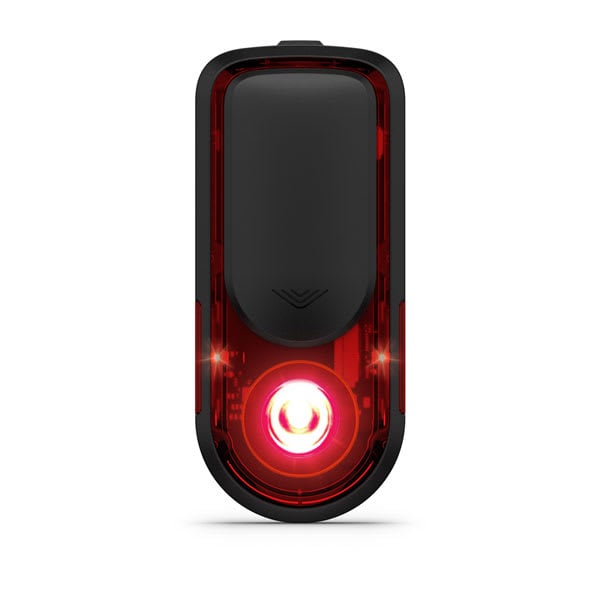
Garmin launched the RearVue 820 on 3 February 2026, and DC Rainmaker called it the company’s first new radar in nearly six years. Garmin rates it at 175 m with a 60° beam, and with the latest Edge computers or the Varia app it shows vehicle size, lane changes and a threat level. Garmin watches can buzz on your wrist, and select models add voice alerts. The tail light reaches 100 lumens in day flash, which Garmin says is visible from 2 km, and a brake light flashes when you slow down.
Battery life is the longest of the Garmin radars: 24 hours in day flash, 15 in peloton mode, 10 in solid or night flash, and 30 in radar-only mode. It charges over USB-C, weighs 90 g and is rated IPX7. A new seatpost mount is included; a seat-rail mount kit costs $49.99 extra.
Verdict: The widest published beam and the longest runtime among the Garmin radars, and DC Rainmaker measured 190 m in his best-case test. Our pick if your head unit or watch is a Garmin.
Garmin Varia RTL515
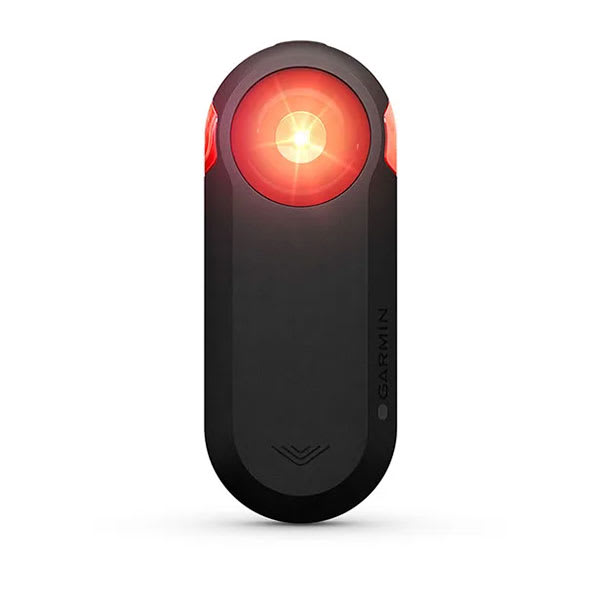
The RTL515 is still on sale at $199.99. Garmin lists 140 m range and a 40° beam, 65 lumens in day flash and visibility from 1.6 km. Runtime is 16 hours in day flash, 8 in peloton and 6 in solid or night flash. At 71 g it is the lightest radar with a published weight, and the mounting kit includes shims for round, aero and D-shaped seatposts. BikeRadar and DC Rainmaker both note that it charges over Micro-USB rather than USB-C.
If you want video too, Garmin’s Varia RCT715 pairs a camera with a 140 m, 40° radar for $399.99. It weighs 147 g and runs 6 hours in day flash while recording at 1080p.
Verdict: $100 less than the RearVue 820 and 19 g lighter, but with a narrower beam and a third less day-flash runtime.
Trek CarBack Radar
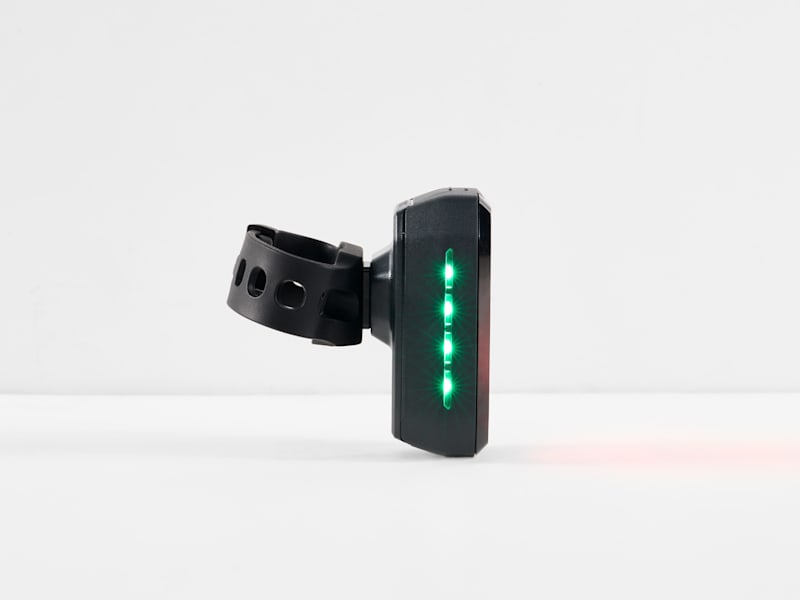
Trek claims the longest range in this guide, 240 m, with alerts on most GPS computers and, through the Trek Accessory app, the approach and passing distance of each vehicle on your phone. The light has four modes: day flash at 90 lumens, day steady at 25, and night steady and night flash at 5 lumens each. Trek says the day flash is visible from up to 2 km.
Trek publishes a battery figure of 7+ hours but no runtime per mode. The 2,000 mAh battery takes 4 hours to charge, fuel-gauge LEDs show the charge level, and the unit weighs 87 g, is rated IPX7 and has a mount that fits aero seatposts.
Verdict: The longest claimed range, and approach and passing distances in Trek’s app. Against it: 5-lumen night modes, and 7+ hours of battery where the others publish 16 to 24 hours in day flash (15–18 in Magene’s quick flash).
Lezyne Radar Drive Rear

Of the radars that publish their output, the Radar Drive is the brightest: 300 lumens in day flash, for 18 hours. Its mode chart also lists 80 lumens on high for 4 hours, a 50-lumen flash for 20 hours, and car-alert flash and solid modes at 150 and 120 lumens. Lezyne rates the radar at 150 m, with 270° visibility from the lens.
Alerts go to compatible GPS computers or Lezyne’s Radar Ally app, or, paired with the React Drive front light, to the front light itself, with no phone or computer needed. It weighs 144 g, is rated IPX7, fits round, aero and D-shaped posts, and comes without a USB-C cable unless bought as Lezyne’s loaded kit. Lezyne notes it is not approved under Germany’s StVZO rules.
Verdict: The most published daytime output and a radar-to-headlight system that needs no phone, for $120 less than Garmin’s RearVue 820. At 144 g, it is the heaviest of the six radars with a published weight.
Bryton Gardia R300L

Bryton claims 190 m of detection, rates the threat from each vehicle’s relative speed and changes the warning light to match. A built-in g-sensor triggers a brake light, the day flash is visible from up to 1.6 km, and the light has a 220° viewing angle. Battery life is 17 hours in day flash and 12 in solid mode, and the light dims itself when the battery runs low.
It connects over ANT+ and Bluetooth 5.0, charges over USB-C and comes with aero and D-shape mounts. Bryton states water resistance to 1 m for 30 minutes but no lumen or weight figures.
Verdict: A long claimed range and good runtime at €129.95. The missing lumen figure makes the light side hard to judge.
Magene L508
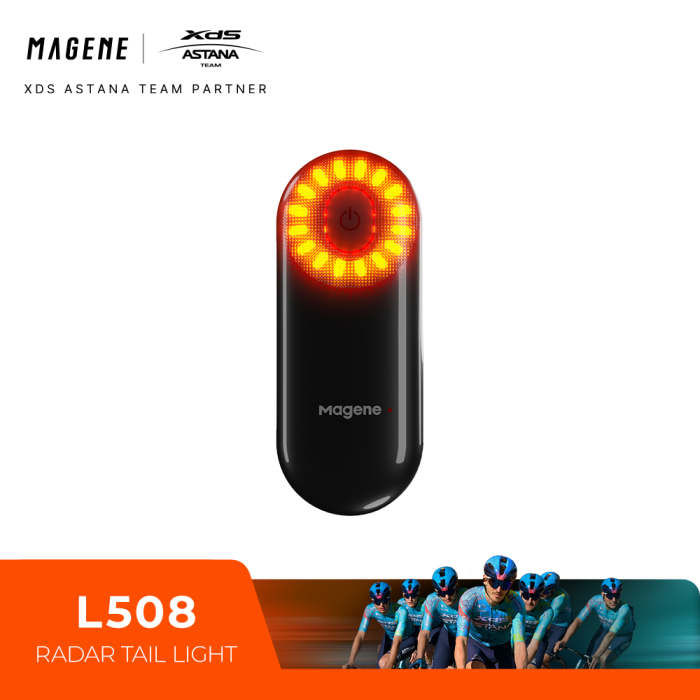
The L508 costs $99 and publishes the most detail of any radar here: 140 m range, a 40° horizontal and ±10° vertical beam, and detection of vehicles closing at 10–120 km/h. Output is 6–40 lumens depending on mode, with 220° visibility up to 1.2 km. Runtime is 4–11 hours solid, 15–18 hours in quick flash and 19 hours in radar-only mode, and it is rated IPX7.
It works with any computer that supports ANT+ radar, including some Garmin, Wahoo and Bryton units. Showing the radar in Magene’s own Utility app costs $1.99 or a newsletter sign-up. Magene does not list a weight.
Verdict: One-third of the RearVue 820’s price, with the same published range as the RTL515. The light is modest, so pair it with a bright daytime rear light if you ride busy roads in daylight.
Front Lights
Exposure Strada 13 SB

Exposure calls the Strada 13 the first full rebuild of its road light in over three years. Two Cree XHP35.2 LEDs give 2,000 measured lumens, spread as a 100° flood across the road with a 13° spot further down the lane. Its twin-sensor AKTiv system dips the beam below an oncoming driver’s eyeline and returns to full power once the car has passed, and the DayBright pulse is visible from over 1 km in daylight, Exposure says.
The SB version’s 12,000 mAh battery runs from 2 hours at full output to 36 on the lowest setting; a smaller RS version has 8,000 mAh. It is sealed to IP67, impact-rated to IK09, charges over USB-C, doubles as a power bank, and shows its battery on an ANT+ head unit. It weighs 280 g.
Verdict: The brightest light here, the only one with dust and impact ratings, and the only one that dips itself for oncoming traffic. Expensive and the heaviest of the four, but the one we would choose for unlit roads.
Lezyne React Drive Front

The React Drive has the fullest mode chart here: 1,200 lumens for 2 hours in Overdrive, 600 for 4.5, 300 for 9.5 and 25 for 65 hours, plus a 100-lumen night flash for 60 hours and a 700-lumen day flash for 70. It is compatible with Lezyne’s Infinite Light Power Pack+ for extra runtime.
Paired with the Radar Drive Rear, it gives visual and audio vehicle alerts on the front light itself. It is rated IPX7, charges over USB-C and weighs 156 g.
Verdict: Strong output and very long flash runtimes for the money. The obvious partner if you choose Lezyne’s radar.
Trek Ion Pro RT
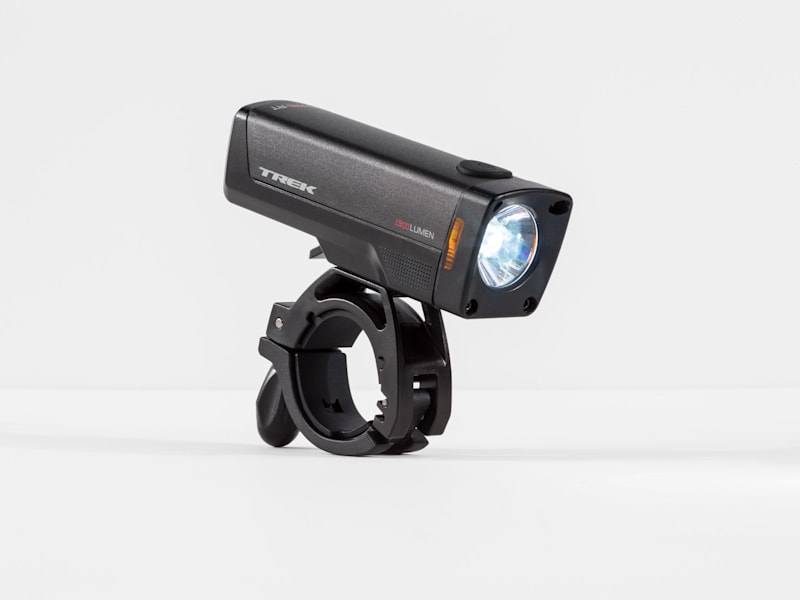
Trek lists 1,300 lumens for 1.5 hours, 800 for 3, 400 for 6 and a day flash that runs 22 hours and is visible from up to 2 km. Over ANT+ it connects to compatible devices for an always-on setting, battery status and wireless control.
The 5,000 mAh 21700 cell takes 7 hours to charge. The light weighs 192 g, fits bars from 25.4 to 35.0 mm and is rated IPX4, the lowest water rating of the four front lights.
Verdict: The most lumens per dollar in this guide. Against it: 1.5 hours at full power (the same as the UT800), a 7-hour charge and the lowest water rating here.
Garmin Varia UT800

The UT800 gives 800 lumens for 1.5 hours, 400 for 3 and 200 for 6, with a night flash for 6 hours and a day flash for 25. Paired with an Edge computer, it adjusts its output to your speed, and select Edge units can also adjust it to the ambient light. Garmin rates daytime visibility at over a mile.
It weighs 130 g (140 g in Garmin’s feature text), is rated IPX7 and has a 270° viewing angle. Garmin sells it as an Urban Edition with an out-front handlebar mount and as a Trail Edition with a helmet mount.
Verdict: The lightest front light here and the only one that adjusts to your speed when paired with an Edge. It also has the lowest maximum output of the four, at 800 lumens.
Buying Advice
- Check the display first. Garmin lists its compatible Edge computers and watches; Magene works with any ANT+ radar computer; Garmin and Lezyne also send alerts to their phone apps, and Trek’s app shows approach and passing distances.
- Check your seatpost. Trek, Lezyne, Bryton and the RTL515 include fittings for aero seatposts; the RearVue 820 ships with a new seatpost mount, and its seat-rail kit is extra.
- Use a steady front beam on unlit roads. The Highway Code allows flashing lights but recommends a steady front lamp where there is no street lighting. Keep the flash modes for lit roads and daylight.
- Plan for the weather and the charge. Garmin warns that snow, ice and heavy rain can limit same-speed tracking. Trek quotes 7 hours to charge the Ion Pro RT and 4 hours for the CarBack.
What We’d Buy
Best radar: Garmin Varia RearVue 820. A 60° beam and 24 hours in day flash. Best on a budget: Magene L508, at $99 with the same published range as the RTL515. Best front light: Exposure Strada 13 SB, with 2,000 lumens and automatic dipping. For less money, the Lezyne React Drive gives 1,200 lumens for $124.99 and pairs with the Radar Drive.
Rain or shine, your training adapts
Paincave adjusts your plan whether you ride in the rain or take a rest day. The engine works with your life, not against it.
Sources
- Clocks and rules: GOV.UK, “When do the clocks change?”; NIST, “Daylight Saving Time (DST)”; GOV.UK, The Highway Code, rules for cyclists (rules 59 and 60).
- Makers’ product pages (read October 2026): Garmin Varia RearVue 820 (US and UK stores), Varia RTL515, Varia RCT715, Varia UT800 and Varia Seat Rail Mount Kit (US store); Garmin press release, 3 February 2026; Trek CarBack Radar and Ion Pro RT (US store) and Trek’s “ABCs of Awareness” page; Lezyne Radar Drive Rear and React Drive Front, including their mode charts (Lezyne USA store); Bryton Gardia R300L (Bryton Global Official site, Europe/UK); Magene L508 (Magene global store); Exposure Strada 13 SB (Exposure Lights UK and EU prices).
- Independent coverage: DC Rainmaker, “Garmin’s New Varia RearVue 820 In-Depth Review: Worth the upgrade?” (10 February 2026); Nick Clark, BikeRadar, launch report on the Varia RearVue 820 (3 February 2026).
- Research: Madsen, Andersen and Lahrmann (2013), “Safety effects of permanent running lights for bicycles: A controlled experiment”, Accident Analysis & Prevention 50:820–829; Wood, Tyrrell, Marszalek, Lacherez and Carberry (2013), “Bicyclists overestimate their own night-time conspicuity and underestimate the benefits of retroreflective markers on the moveable joints”, Accident Analysis & Prevention 55:48–53.
Prices are the makers’ own store prices in October 2026, in the market named; Bryton’s page lists a price but has no buy button. Ranges, lumens and runtimes are makers’ claims unless a test is named; where reviews differ from Garmin’s spec pages, we use Garmin’s figures. No affiliate links were used.