Why a Power Meter Changes Everything
Heart rate tells you how your body is responding to effort. Power tells you what the effort actually is. That distinction matters more than most cyclists realize.
Heart rate lags behind effort by 30 to 60 seconds, drifts upward with heat and fatigue, and varies day to day based on sleep, stress, and caffeine. Power is instant, objective, and reproducible.
With a power meter, you unlock the entire training ecosystem: FTP testing, power zones, Training Stress Score, CTL fitness tracking, and proper periodization. Without one, you are guessing. With one, you are training.
Quick Comparison
| Power Meter | Type | Price (Dual) | Accuracy | Battery | Life | Weight |
|---|---|---|---|---|---|---|
| Favero Assioma PRO RS-2 | Pedal | $814 / €750 | ±1.0% | Rechargeable | 160h | 250g pair |
| Favero Assioma DUO-Shi | Spindle | $589 / €540 | ±1.0% | Rechargeable | 50h | ~198g pair |
| Garmin Rally RS210 | Pedal | $1,200 / €1,100 | ±1.0% | Rechargeable | 90h | 436g pair |
| Stages Power LR | Crank | $890 / €820 | ±1.5% | CR2032 | 175h | +30g |
| 4iiii Precision 3+ Pro | Crank | $530 / €490 | ±1.0% | CR2032 | 550h | +29g |
| Quarq DZero DUB | Spider | $470–700 / €430–645 | ±1.5% | CR2032 | 200h | 125g spider |
| SRM X-Power Road | Pedal | $1,649 / €1,520 | ±2.0% | Rechargeable | 30h | 280g pair |
Prices are MSRP as of early 2026. All models broadcast on both ANT+ and Bluetooth Low Energy.
Editor's Picks
Best Overall
Favero Assioma PRO RS-2
$814 / €750 · ±1% · 160h battery
Best Budget
4iiii Precision 3+ Pro
$530 / €490 dual · ±1% · 550h battery
Best Premium
Garmin Rally RS210
$1,200 / €1,100 · ±1% · Swappable bodies
Individual Reviews
Favero Assioma PRO RS-2 — Editor's Pick
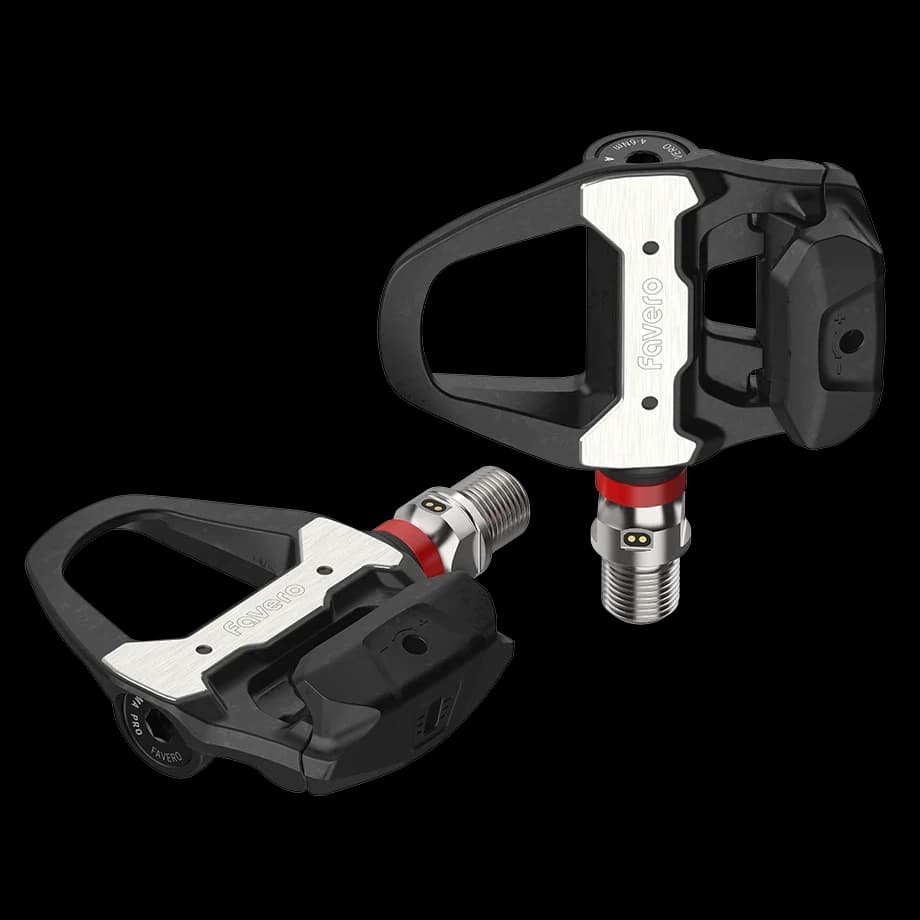
The Assioma PRO RS-2 is the power meter we recommend to most cyclists. At $814 / €750 for dual-sided pedals with ±1% accuracy, nothing else matches its combination of price, precision, and simplicity.
Installation is as easy as cycling gets: thread the pedals on, pair with your head unit, ride. You can swap them between bikes in under a minute with a pedal wrench. The rechargeable battery lasts 160 hours after a firmware update that nearly tripled the original spec.
Favero's IAV (Instantaneous Angular Velocity) technology provides stable readings even at very low cadences, and temperature compensation is automatic. The Favero app handles firmware updates and calibration without fuss.
What the community says: Universally praised customer support. Dead-simple setup is the most cited advantage. However, some long-term owners report occasional erratic readings after 18+ months, and bearing wear around 9,000 km has been documented on forums.
DUO-Shi note: The $589 / €540 DUO-Shi variant uses Shimano SPD-SL compatible spindles but has a wider Q-factor (64mm vs standard 53mm) that bothers some riders, and battery life drops to 50 hours.
- Pros: Best value dual-sided, rechargeable USB, 160h battery, swappable between bikes in seconds, excellent support
- Cons: DUO-Shi Q-factor wider than standard, occasional erratic readings reported after 18+ months, bearing wear around 9,000 km
Verdict
The Assioma PRO RS-2 is the default recommendation for good reason. Dual-sided accuracy at what used to be single-sided prices, with the easiest installation of any power meter type. Unless you have a specific need that pedals cannot solve, start here.
Garmin Rally RS210
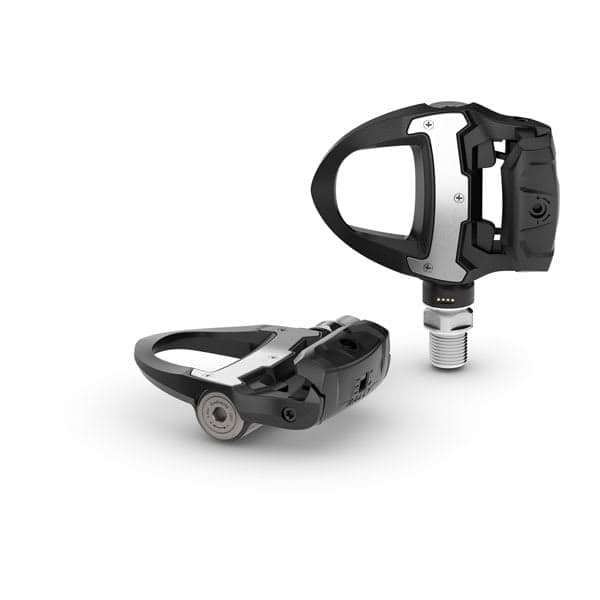
The Rally RS210 is the only pedal power meter with interchangeable pedal bodies. Buy the RS (SPD-SL) version for road, then swap to XC (SPD) bodies for mountain or gravel. One power meter investment, multiple cleat systems. No other manufacturer offers this.
Build quality is excellent. USB-C rechargeable with 90 hours of battery life and a 15-minute quick charge that gives 12 hours of riding — genuinely useful for forgetting to charge the night before a race. Cycling Dynamics data is a nice bonus on Garmin head units.
What the community says: Left-right power discrepancies of up to 20% have been reported on some units, which defeats the purpose of dual-sided measurement. A persistent "sticky watts" bug over Bluetooth causes power to hang at a reading instead of dropping when you stop pedaling. Some users also report residual torque readings after hard sprints.
- Pros: Swappable pedal bodies (road/MTB/Look), Cycling Dynamics, USB-C rechargeable, 15-min quick charge for 12h riding, excellent build quality
- Cons: $1,200 / €1,100 is steep versus Favero, left-right discrepancy issues reported, "sticky watts" Bluetooth bug, residual torque after sprints
Verdict
If you need one power meter for both road and off-road cleat systems, the Rally is the only game in town. But at $1,200 / €1,100 — nearly 50% more than the Favero — single-bike riders should think carefully about whether the swappable body system justifies the premium.
Stages Power LR (Ultegra)
Stages filed for bankruptcy in April 2024 and was acquired by Giant Group, relaunching in June 2025. The brand is back, but the disruption left some riders cautious about long-term warranty support.
The LR dual-sided crank arm meter is the lightest option at just +15g per side. It integrates cleanly with Shimano cranksets and uses widely available CR2032 batteries lasting 175 hours. For weight-obsessed riders on Shimano groupsets, it remains appealing.
What the community says: Temperature drift is the most cited issue. Multiple owners report readings becoming unreliable above 93°F (34°C), with power drifting upward as the unit heats up. Battery voltage differences between CR2032 brands can also cause calibration drift. In head-to-head accuracy comparisons, Stages consistently rated worse than Favero and Quarq.
- Pros: Lightest power meter (+15g per side), 175h CR2032 battery, clean Shimano integration, affordable single-sided at $460 / €425
- Cons: Temperature drift in heat (93°F+), voltage-related drift between battery brands, accuracy lags Favero and Quarq in comparisons, bankruptcy history creates warranty uncertainty
Verdict
A solid option for Shimano riders who prioritize weight above all else. But the temperature drift issue is real, and the bankruptcy history introduces risk. At $890 / €820 for the Ultegra LR, the Favero Assioma PRO RS-2 at $814 / €750 is more accurate, more reliable, and easier to install.
4iiii Precision 3+ Pro
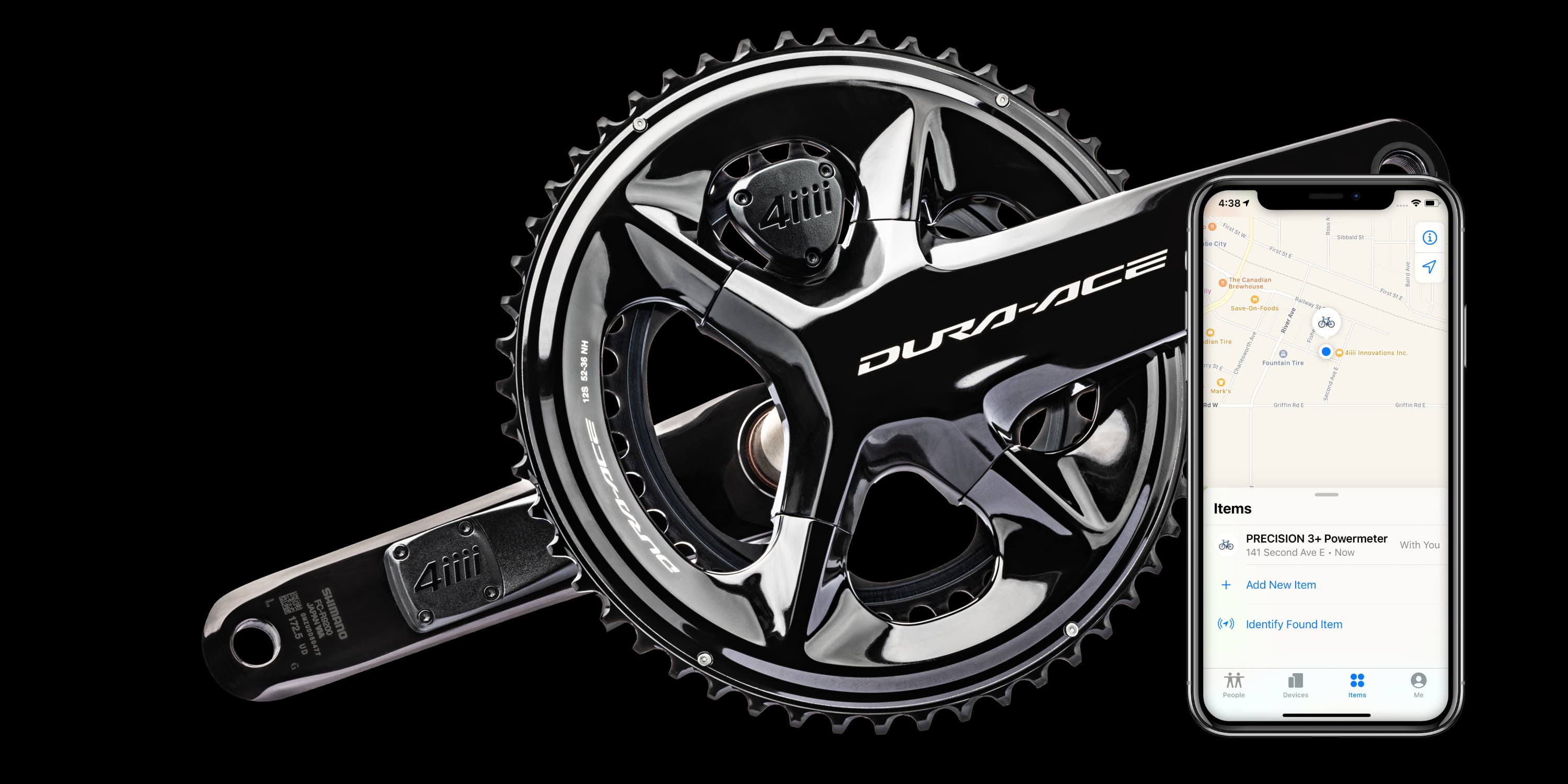
The 4iiii Precision 3+ Pro is the lightest power meter on the market at just +9g per crank arm, and the dual-sided version at $530 / €490 is the most affordable dual-sided meter you can buy. Battery life is extraordinary — 550 hours on a single CR2032, meaning most riders can go an entire season without a battery change.
The Pro model adds Apple Find My integration and a 3-year warranty. Accuracy is claimed at ±1%, and independent tests generally confirm this is achievable in normal conditions.
What the community says: The Gen 3 launch was rocky. Early units produced wild readings — 300+ watts at low effort was widely reported. 4iiii issued firmware updates that resolved most issues, but the rocky launch eroded some trust. On dual units, some owners report left/right balance skew that doesn't match other meters.
- Pros: Lightest PM on market (+9g), 550h battery life, Apple Find My, 3-year warranty, most affordable dual-sided at $530 / €490
- Cons: Gen 3 had rocky launch with wild readings, some L/R balance skew reported on dual units, factory install requires 2-3 week turnaround
Verdict
The best budget option for dual-sided power. If $530 / €490 gets you into dual-sided training six months earlier than saving for a Favero, buy the 4iiii today. The Gen 3 firmware issues have been addressed, and the battery life alone makes it a compelling low-maintenance choice.
Quarq DZero DUB
The Quarq DZero is SRAM's in-house spider-based power meter and the default choice for riders already on SRAM cranksets. Because it measures at the spider, you get true total power from both legs without the left/right doubling error of single-sided meters.
MagicZero auto-calibration is the standout feature. Combined with 10K TempComp temperature compensation, the DZero essentially never needs manual zeroing. It just works, ride after ride, in any conditions.
What the community says: Rock-solid reliability is the universal verdict. Riders who own a DZero almost never think about it — which is the highest compliment for a power meter. The main gripe is that MagicZero can become "TragicZero" if you stand on one pedal (like at a stoplight with one foot clipped in), causing a zero-offset error that inflates readings until the next coast.
- Pros: Rock-solid reliability, MagicZero auto-calibration, 10K TempComp, true total power, 200h CR2032 battery, set-and-forget
- Cons: SRAM-only compatibility, spider-based install requires crankset removal, MagicZero can offset if you stand on one leg, total price with cranks is $900–1,400 / €830–1,290
Verdict
If you already ride SRAM and want a set-and-forget power meter, the DZero is excellent. The MagicZero quirk is easy to avoid once you know about it. The main barrier is compatibility — this is SRAM-only, and the total cost with cranks can approach pedal meter territory.
SRM X-Power Road
SRM invented the power meter in 1986. The X-Power Road is their pedal-based system and, at 140g per pedal, the lightest pedal power meter available. The SRM name carries undeniable legacy weight in professional cycling.
That said, we cannot recommend the X-Power at its current price point.
At $1,649 / €1,520 for dual-sided pedals, it is the most expensive option in this guide. Yet SRM only claims ±2% accuracy — the worst specification of any premium power meter. Battery life is 30 hours with an additional 5% daily standby drain, meaning you need to charge before nearly every ride if you ride three or more times per week.
What the community says: The accuracy spec is not marketing conservatism. Independent tests confirm the X-Power consistently underperforms the Favero, Garmin, and even Quarq in accuracy. For a meter at this price point, that is difficult to justify.
- Pros: Lightest pedal PM at 140g each, SRM legacy reputation, good build quality
- Cons: Only ±2% accuracy (worst of any premium PM), 30h battery life + 5% daily standby drain, $1,649 / €1,520 is massively overpriced for specs delivered
Verdict
A legendary name does not make a good product in 2026. The Favero Assioma PRO RS-2 costs half as much, is more accurate, lasts five times longer on a charge, and is 30g heavier. Unless you are buying SRM for the logo, the X-Power is hard to recommend.
Single-Sided vs. Dual-Sided
This is the most common question buyers ask, and the answer depends on your budget more than your training needs.
Single-sided meters measure one leg (usually the left) and double the value. For most riders, left/right power balance falls between 48/52 and 52/48. That means the single-sided estimate is within 2–4% of your true total power — consistently.
As long as the error is consistent, your zones, TSS, and FTP tracking all work correctly because they are based on relative changes, not absolute watts. A single-sided meter that always reads 3% high still detects a 5% FTP improvement perfectly.
Dual-sided meters measure both legs independently, giving true total power and left/right balance data. This matters if you have a significant imbalance from injury, are doing single-leg drills, or are comparing data across multiple meters on different bikes.
Our recommendation: If your budget is under $400 / €370, buy a single-sided 4iiii ($335 / €310) and start training with power today. If you can stretch to $530 / €490–$814 / €750, the 4iiii Precision 3+ Pro dual or Favero Assioma PRO RS-2 gives you the real thing. Do not delay buying a power meter by six months to save up for dual — six months of data from a single-sided meter is worth more than six months of waiting.
What to Look for When Buying
Accuracy Specification
Look for ±1% to ±1.5%. Anything claiming better than ±1% is marketing — environmental factors make sub-1% accuracy unrealistic in field conditions. Anything worse than ±2% is below the current standard.
Temperature Compensation
Strain gauges drift with temperature. Starting a ride in a cold garage and climbing into warm sunshine can cause several watts of error without proper compensation. All meters in this guide handle this, but check for it on lesser-known brands.
ANT+ and Bluetooth Dual Broadcast
Every meter on our list broadcasts on both protocols. This lets you connect to your bike computer (typically ANT+) and Zwift or TrainerRoad (typically Bluetooth) simultaneously without a bridge device.
Battery Type
Rechargeable (USB-C) means no battery hunting but requires periodic charging. CR2032 coin cells are cheap and available everywhere, with some meters lasting 500+ hours on a single cell. Choose based on whether you prefer charging or replacing.
Installation Complexity
Pedal-based meters: five minutes with a pedal wrench. Crank-based: may need specific crank arm compatibility. Spider-based: requires crankset disassembly. Factor this into your decision, especially if you plan to swap between bikes.
Already have a power meter?
Use our FTP calculator to find your threshold and training zones from any test protocol — 20-minute, 8-minute, or ramp test.
FTP CalculatorHow Paincave Uses Your Power Data
A power meter gives you watts. What you do with those watts determines whether your training actually improves. Paincave processes every ride automatically.
Automatic FTP Detection
Paincave monitors your best 20-minute power within a rolling 90-day window. When you set a new peak, your FTP updates automatically — no manual testing required. Breakthroughs from races and hard group rides count too.
Power Zones That Stay Current
Your seven Coggan power zones update automatically when your FTP changes. No spreadsheets, no manually editing zone boundaries. Every ride is analyzed against your current fitness.
TSS, CTL, and Fitness Tracking
Every ride receives a Training Stress Score based on Normalized Power and your current FTP. Daily TSS feeds into your Chronic Training Load (CTL) fitness curve, Acute Training Load (ATL) fatigue, and Training Stress Balance (TSB) freshness — the Performance Management Chart that drives intelligent periodization.
Power Profile and Rider Type
Paincave builds your complete power profile from 5 seconds to 60 minutes, benchmarking each duration against Coggan categories. This reveals whether you are a sprinter, time trialist, all-rounder, or climber — and where your biggest gains are hiding.
Key takeaway
A power meter gives you watts. Paincave turns those watts into FTP tracking, training zones, TSS, fitness monitoring, and a complete rider profile — automatically, from every ride.
Our Final Verdict
Best Overall: Favero Assioma PRO RS-2
Dual-sided, ±1% accuracy, $814 / €750, rechargeable with 160 hours of battery life, and the easiest install of any power meter. Unless you have a specific reason to choose something else, start here.
Best Budget: 4iiii Precision 3+ Pro
At $530 / €490 for dual-sided or $335 / €310 for single, the 4iiii is the most affordable path to quality power data. The 550-hour battery life is remarkable. If the lower price gets you training with power months earlier, that data advantage is worth more than any spec sheet difference.
Best Premium: Garmin Rally RS210
The swappable pedal body system is genuinely unique. If you ride road and gravel on different cleat systems and want one power meter investment to cover both, Rally is the only option. At $1,200 / €1,100 it is expensive, but you are buying versatility no competitor offers.
The best power meter is the one you actually buy and use. Every week without power data is a week of training blind. Pick a meter that fits your budget, install it, and start riding with real numbers.
Sources
This review draws on data from DC Rainmaker's independent accuracy testing, GPLama's power meter comparison videos, community reports from the Slowtwitch, TrainerRoad, and Reddit r/cycling forums, and manufacturer specifications verified against community testing as of March 2026. No affiliate links were used in this article.