What a Triathlon Watch Has to Do
Record three sports as one activity. A multisport profile keeps the swim, both transitions, the bike, and the run in one file. Two of the four makers say their watch changes sport by itself: Garmin lists multisport auto transition on the fēnix 9 spec sheet, and Apple says the Ultra 4 recognizes when you move between swimming, cycling, and running. COROS and Suunto list triathlon modes, but their pages don’t say whether the switch is automatic.
Outlast the longest day. the5krunner judges battery against the 17-hour IRONMAN cutoff. Each maker rates several GPS modes, and Garmin, COROS, and Suunto all rate their multi-band or dual-frequency mode lower than the other GPS mode charted below.
Talk to your bike sensors. The fēnix 9 connects to sensors over ANT+ and Bluetooth; the other three use Bluetooth only. the5krunner says the missing ANT+ on the Ultra 4 matters less than it used to, because most sensors now broadcast Bluetooth as well. Garmin, Apple, and Suunto also list running power. COROS doesn’t on its PACE 4 Pro pages, and its Running Form Test needs a COROS POD.
Battery Life With GPS On
On the makers’ numbers, all four are rated beyond 17 hours with GPS on, but not in every size and mode. The smallest fēnix 9 (43 mm) is rated at 15 hours with Max Accuracy forced on, and the Ultra 4’s standard rating leaves one hour to spare.
Garmin fēnix 9
47 mm, Normal (default, SatIQ)
47 mm, Max Accuracy (multi-band forced)
43 mm, Normal (default, SatIQ)
43 mm, Max Accuracy (multi-band forced)
Apple Watch Ultra 4
Standard workout tracking
Max Extended (on-screen heart rate as a 5-minute average, no splits or alerts)
COROS PACE 4 Pro
High: All Systems
Max: Dual Frequency
Suunto Race 3S
All-systems, single-band
All-systems, multi-band
Rated vs. Reviewer Results
DC Rainmaker wore all four in his usual workouts. One result stands out: the PACE 4 Pro fell well short of its rating, which COROS puts down to bugs.
Garmin fēnix 9
Maker rating: 47 mm fēnix 9 Pro: 32 h in the default mode.
DC Rainmaker: His 47 mm fēnix 9 Pro AMOLED projected about 40 h on a midday road ride in the default satellite mode, and about the same on a 6.5-hour outing on the water.
Apple Watch Ultra 4
Maker rating: 18 h of standard workout tracking.
DC Rainmaker: Extrapolated 18 h 47 min from a 2-hour ride and 18 h 33 min from a 6 h 36 min activity.
COROS PACE 4 Pro
Maker rating: 30 h in Max (dual-frequency) GPS with the always-on display.
DC Rainmaker: Consistently under 20 h, sometimes the low 20s; rides estimated around 20 h. COROS blamed bugs and plans a fix in November.
Suunto Race 3S
Maker rating: 38 h multi-band (32 h with the always-on display).
DC Rainmaker: A 98-minute trail run with navigation used about 5%, a projected 28 h in dual-frequency mode.
Quick Comparison
| Feature | Garmin fēnix 9 | Apple Watch Ultra 4 | COROS PACE 4 Pro | Suunto Race 3S |
|---|---|---|---|---|
| Launched | 25 Aug 2026 | 9 Sep 2026 | 22 Sep 2026 (reported by the5krunner) | 15 Oct 2026 |
| Price (US) | $999.99 (47 mm) | From $799 | $449 | $599 |
| Price (euro) | €999.99 (47 mm, Germany) | From €899 (Germany) | €449 (EU store) | €499 (Germany) |
| Triathlon / multisport profile | Triathlon, swimrun | Multisport workout | Triathlon, Multi-Sport | Triathlon listed |
| Automatic transitions | Yes | Yes | Not stated | Not stated |
| Open-water swim mode | Yes, plus critical swim speed | Yes | Yes | Not stated (swimming listed) |
| Running power | Yes | Yes | Not stated | Yes, from the wrist |
| Bike power meters | ANT+ and Bluetooth | Bluetooth only | Bluetooth only (per DC Rainmaker) | Bluetooth only |
| Water rating | 10 ATM, dive-rated to 40 m | 100 m (ISO 22810), dive to 40 m | 5 ATM, not for diving | 5 ATM (50 m) |
Editor’s Picks
Most Complete
Garmin fēnix 9
$999.99 (47 mm) · auto transitions, ANT+ and Bluetooth
For iPhone Users
Apple Watch Ultra 4
From $799 · auto transitions, 18 h workout rating
Best Value
COROS PACE 4 Pro
$449 · triathlon mode, battery fix planned for November
Individual Reviews
Garmin fēnix 9
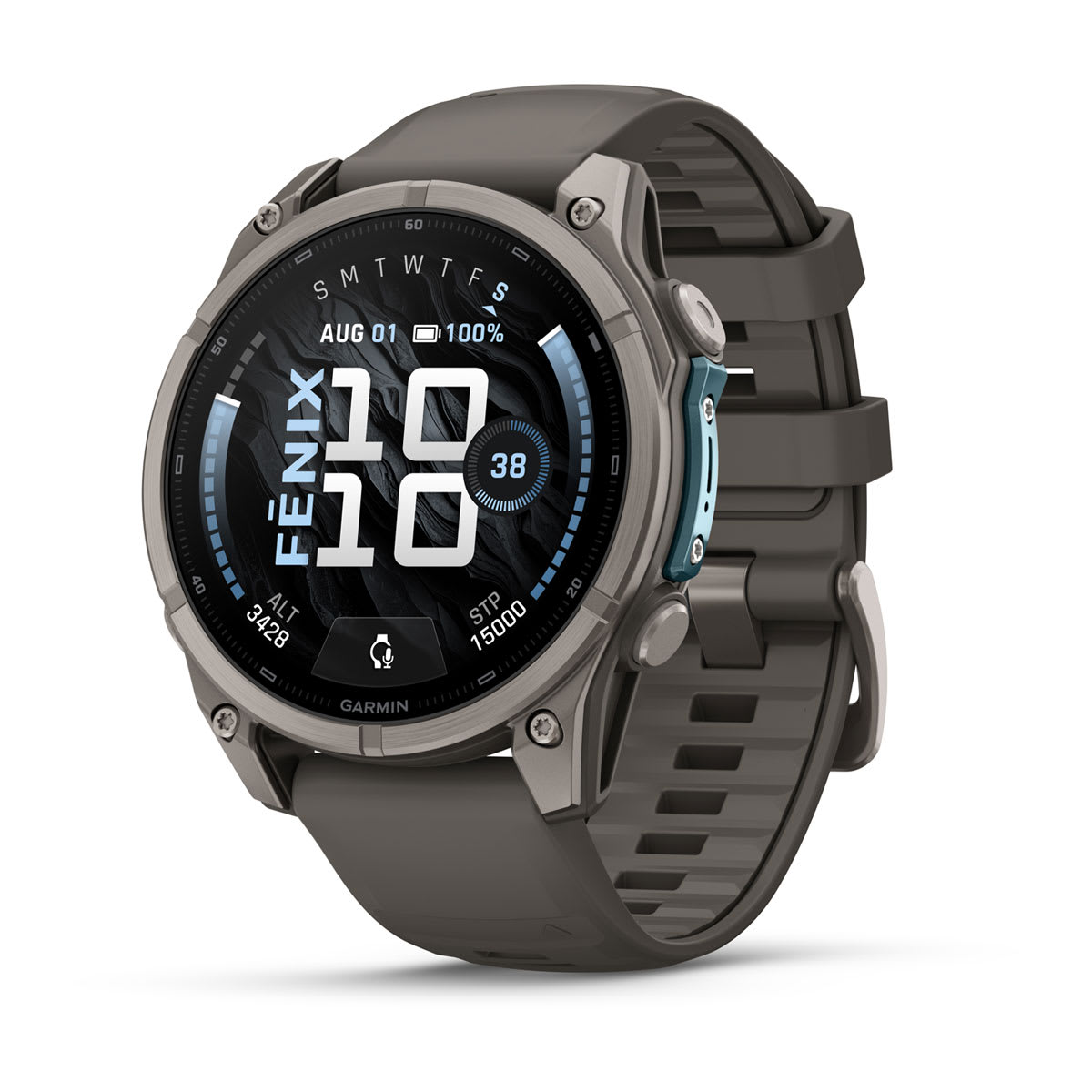
Garmin launched the fēnix 9 and fēnix 9 Pro on 25 August in 43, 47, and 51 mm sizes, from $999.99 and $1,099.99. The base model has an AMOLED display, a titanium bezel, and a sapphire lens; the Pro adds a titanium case, a 3,000-nit display (2,000 on the base, per DC Rainmaker), and satellite and LTE messaging on inReach models. The 47 mm base model weighs 75 g (53 g for the case alone) and is rated 10 ATM.
For triathlon, Garmin’s spec sheet covers every feature row of the comparison table: triathlon and swim-run profiles with automatic transitions, Garmin’s triathlon coach, open-water swim metrics (distance, pace, stroke count and rate, SWOLF), critical swim speed, running power and running dynamics, and power meters over ANT+ or Bluetooth. the5krunner adds that the fēnix 9 controls smart trainers natively, while the Ultra 4 needs a third-party app over Bluetooth FTMS.
The 47 mm is rated at 30 hours in the default mode and 25 in Max Accuracy, which DC Rainmaker says forces multi-band for the whole activity; the 51 mm ($1,099.99) is rated at 54 and 45 hours. Across his GPS tests, including a run between downtown San Francisco high-rises, he saw little value in forcing it over the default SatIQ setting. Long-course racers should mind the 43 mm: 18 hours by default, and 15 in Max Accuracy, which is short of a 17-hour day.
DC Rainmaker calls the fēnix 9 “the most capable sport watch on the market.” His open-water swim was mixed: of two units worn one per wrist in the same mode, one tracked the swim accurately and the other struggled for most of it. The heart-rate sensor is the same Gen5 unit as on the fēnix 8 Pro, which he ranks among the most accurate in a watch, recording every second. He also logged bugs, including a crash mid trail run that lost the minutes until he resumed. the5krunner’s single 10-mile test of the fēnix 9 Pro scored 79% for GPS against 92% for the Forerunner 970; he notes it was one run and the cause isn’t confirmed.
Verdict: The most complete triathlon watch of the four and the only one with ANT+. Pick 47 mm or larger for long-course racing, and leave Max Accuracy off unless you have a reason to use it.
Apple Watch Ultra 4

Apple’s US store lists the Ultra 4 from $799 (up to $899), with £749 in the UK and €899 in Germany. It has a 49 mm titanium case (63.0 g in natural titanium), is water resistant to 100 m (ISO 22810) and rated for recreational diving to 40 m, and needs an iPhone 11 or later (or iPhone SE, 2nd generation or later) on iOS 27.
Apple says the Multisport workout recognizes when you move between swimming, cycling, and running and records each segment. Open-water swimming has its own workout views, running power is listed among the running metrics, and power meters connect over Bluetooth to estimate FTP and set power zones. There’s no ANT+ radio.
Apple rates standard workout tracking at 18 hours, Extended at 25, and Max Extended at 45, the last quoted for outdoor runs, walks, and hikes. Apple says Extended switches on Low Power Mode and loses running form metrics, and Max Extended also turns off alerts and splits; DC Rainmaker adds that Extended turns off the always-on display and Max Extended drops custom workouts. the5krunner notes that 18 hours covers the 17-hour cutoff without Low Power Mode. DC Rainmaker’s extrapolations came to 18 h 47 min from a 2-hour ride and 18 h 33 min from a 6 h 36 min activity: enough, with little margin.
DC Rainmaker rates the new heart-rate sensor the best Apple has made, but during workouts it records a value about every 5 seconds on average, and he found gaps of 11 to 14 seconds when it was unsure. GPS accuracy is unchanged from the Ultra 3, and Apple has dropped GLONASS. He sees maps and navigation as Apple’s biggest gap against endurance watches.
Verdict: The choice for triathletes on an iPhone: confirmed automatic transitions, a full-distance battery rating, and Bluetooth power support. Weaker on navigation than the fēnix 9.
COROS PACE 4 Pro

COROS sells the PACE 4 Pro for $449 in the US and €449 in its EU store. Compared with the PACE 4, it adds a titanium bezel, sapphire glass, and a 1.47-inch, 3,500-nit AMOLED, the largest and brightest COROS display yet. It weighs 51 g on the silicone band (43 g on nylon) and is rated 5 ATM, which COROS describes as suitable for surface water activities, not diving.
COROS describes a dedicated triathlon mode that runs from swim to bike to run, plus a Multi-Sport mode for stacking other activities, and its comparison page lists open-water and pool swim modes. Accessories connect over Bluetooth only. DC Rainmaker notes that the watch looks for paired sensors such as cycling power meters when a workout starts, and the5krunner points out there are no contactless payments and no music streaming. COROS doesn’t say whether transitions are automatic.
COROS rates 60 hours in All Systems mode, the highest figure in the chart above, and 40 hours dual-frequency (45 and 30 with the always-on display). COROS’s own page shows a full-distance race finished in 11 h 48 min with 73% battery left. DC Rainmaker didn’t come close. Against the 30-hour rating for Max GPS with the always-on display, he was consistently under 20 hours, sometimes in the low 20s. On rides it estimated about 20 hours, which COROS attributes to a bug that makes the watch rescan for missing Bluetooth sensors at every stop. COROS told him a fix is planned for November.
Otherwise DC Rainmaker found GPS accuracy perfectly functional and the new heart-rate sensor improved, though he ranks it in the upper middle of the field rather than among the leaders. The on-watch training load still resets every Monday. the5krunner calls it “the best-built watch in the Pace line.”
Verdict: The value pick at $449, with a triathlon mode and the highest GPS battery rating in our chart. Don’t count on those ratings for a full-distance race until COROS ships the promised November fix.
Suunto Race 3S

Suunto’s US store lists the Race 3S at $599 and its German store at €499. The case is 46 mm across and 11.4 mm thick, 56 g with the silicone strap, with a titanium bezel, sapphire crystal, a 1.32-inch 2,000-nit AMOLED, and a 5 ATM rating. The strap fits wrists from 125 to 175 mm.
Suunto lists triathlon among its sport modes, wrist-based running power without a pod, and Bluetooth power meters including Stryd, with power zones. Its Race 3S pages don’t describe automatic transitions or an open-water mode. the5krunner says the Race 3S runs on the same platform as the Race 2, which has automatic transitions, but doesn’t confirm them for the 3S.
Suunto rates 38 hours multi-band (32 with the always-on display), 45 hours single-band, up to 120 hours in power-saving GNSS modes, and 12 days as a smartwatch. In DC Rainmaker’s test, a 98-minute trail run with navigation used about 5%, a projected 28 hours in dual-frequency mode.
He found the new heart-rate sensor a big step up from the Race S, and its GPS tracks were in line with the Garmin, COROS, and Apple watches he wore alongside it; his swim accuracy tests were still to come. His objection is the price: $599 and €499, against the Race S’s launch price of $349 and €349, with a 2,000-nit panel when most 2026 watches use 3,000-nit ones. the5krunner hasn’t tested the Race 3S yet.
Verdict: Light, well built, and with a strong heart-rate sensor, but the least proven for triathlon of the four: no confirmed automatic transitions, no open-water test yet, and $150 more than the PACE 4 Pro in the US.
What We’d Buy
Most complete: Garmin fēnix 9. Garmin lists every triathlon feature in the table, and it’s the only watch here with ANT+ for sensors that don’t broadcast Bluetooth. Buy the 47 mm or larger if you race long course.
For iPhone users: Apple Watch Ultra 4. Apple confirms automatic transitions, and DC Rainmaker’s battery results line up with the 18-hour rating, about an hour more than a 17-hour day needs.
Best value: COROS PACE 4 Pro. At $449 it costs less than half the fēnix 9 and lists triathlon and open-water modes. Check that the November firmware closes the battery gap DC Rainmaker found before you rely on it for a full distance.
We’d hold off on the Suunto Race 3S for triathlon until reviewers have tested it in the water and Suunto confirms how its multisport mode handles transitions.
Track your training load with real CTL/ATL/TSB — not a proprietary black box
Paincave uses the open Banister impulse-response model. Same math regardless of which watch you wear.
Sources
- Garmin (read October 2026): press release “Garmin expands its flagship performance smartwatch lineup with fēnix 9 and fēnix 9 Pro” (25 August 2026); fēnix 9 43 mm, 47 mm, and 51 mm and fēnix 9 Pro 47 mm product and spec pages (US store); the 47 mm page on the German store; fēnix 9 Series Owner’s Manual (battery information, power modes, satellite settings).
- Apple (read October 2026): Newsroom, “Apple unveils Apple Watch Ultra 4” (9 September 2026); Apple Watch Ultra 4 product page and technical specifications; Apple Store pages for the US, UK, and Germany.
- COROS (read October 2026): PACE 4 Pro product page, spec pages (US and EU stores), and the COROS watch comparison page.
- Suunto (read October 2026): press release on the Race 3S launch (15 October 2026); Race 3S product page, specifications, and FAQ on the US store; Race 3S page on the German store.
- DC Rainmaker: “Garmin Fenix 9 Series In-Depth Review: Worth the Upgrade?” (September 2026); “Apple Watch Ultra 4 In-Depth Review: Does it Match the Hype?” (17 September 2026); “COROS Pace 4 Pro In-Depth Review: Worth the Upsell?” (8 October 2026); “Suunto Race 3S In-Depth Review: A Pricey Upgrade” (15 October 2026).
- the5krunner: “Apple Watch Ultra 4 vs Ultra 3: Full Comparison” (9 September 2026); “Garmin Fenix 9 Pro – GPS Accuracy” (14 September 2026); COROS PACE 4 Pro launch report (22 September 2026); “Garmin Fenix 9 vs Apple Watch Ultra 4: Which to Buy?” (25 September 2026); “Suunto Race 3S, Race 2 or Run 2 – which one to buy” (15 October 2026).
Prices are the makers’ own store prices in October 2026 and change often. No affiliate links were used in this article.